Our nationwide survey of prepaid electricity users explored how often balances run out, how quickly power is restored, and the kinds of adjustments people make along the way. Taken together, the results offer a look at how prepaid electricity works in real life and where better planning and visibility can make it even easier to manage.
Key Takeaways
- 23% of prepaid electricity users run out of electricity before being able to top up their balance at least once a month; nearly 2 in 5 (39%) have gone without electricity for over 24 hours at least once this year.
- 1 in 5 prepaid electricity users have lost pay or missed work or a meeting because their electricity ran out.
- Prepaid electricity users run out of their balance fastest in July (46%), August (43%), and January (39%).
- 35% of prepaid electricity users have had to choose between topping up their electricity balance or paying for an essential expense; groceries (60%), gas or transportation (41%), and debt or loan payments (37%) are the most common sacrifices.
How Often Power Runs Out and How Quickly It Comes Back
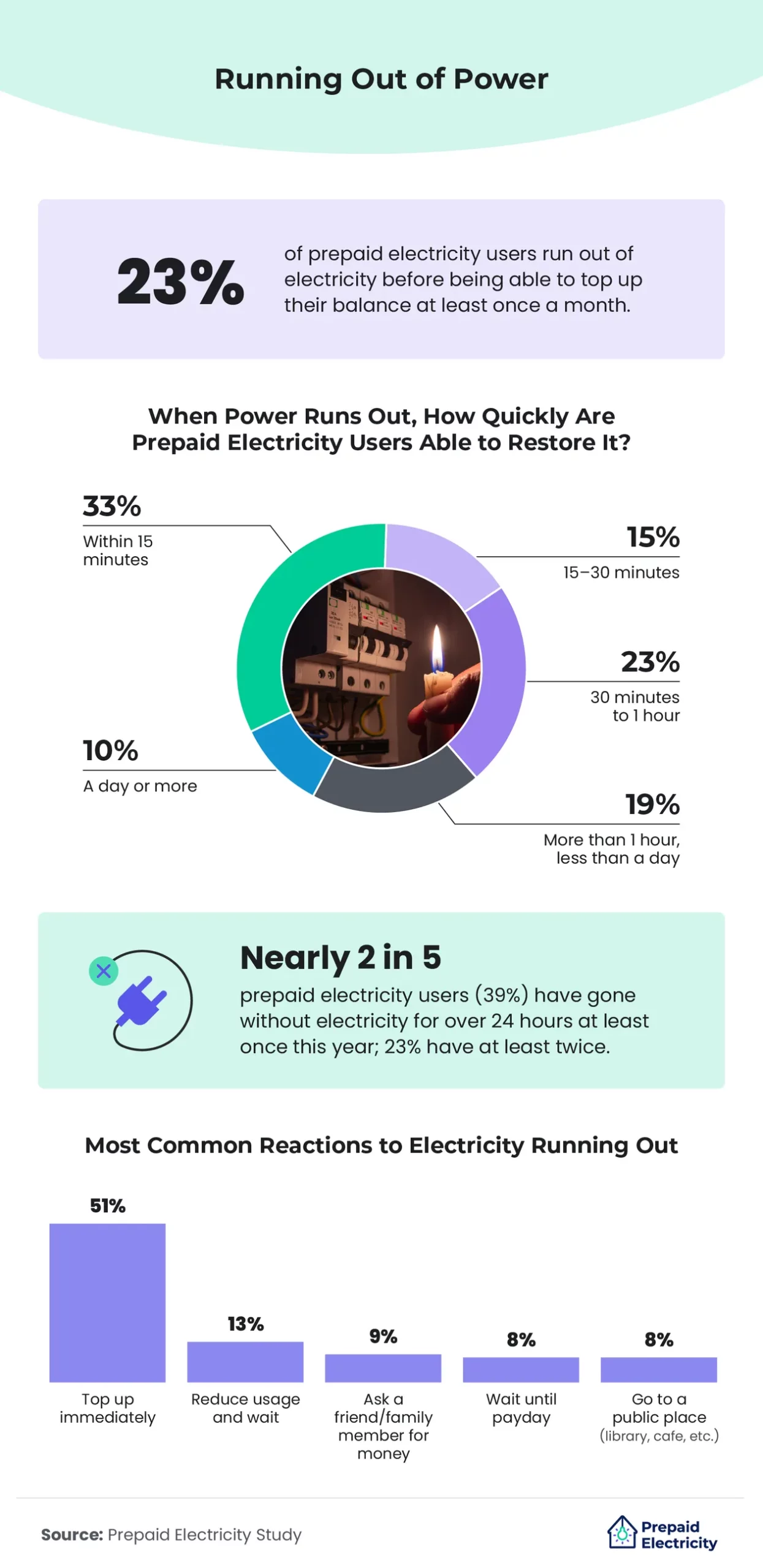
- 23% of prepaid electricity users run out of electricity before being able to top up their balance at least once a month. This jumps to 35% among those with at least 2 children in the home.
- 27% of Texan prepaid electricity users run out of electricity before being able to top up their balance at least once a month.
- While 48% of prepaid electricity users are able to restore their power within 30 minutes after it runs out, 29% take over an hour to do so.
- 16% of low-income prepaid electricity users (with annual household income under $50,000) are able to restore their electricity within a day or more.
- Nearly 2 in 5 prepaid electricity users (39%) have gone without electricity for over 24 hours at least once this year; 23% have at least twice.
- 47% of low-income prepaid electricity users (under $50,000 annual household income) have gone without electricity for over 24 hours at least once this year.
- 51% of prepaid electricity users’ immediate reaction when their electricity runs out is to top up. Another 13% reduce usage and wait, while 8% wait until payday.
What Happens When Electricity Cuts Out Mid-Routine
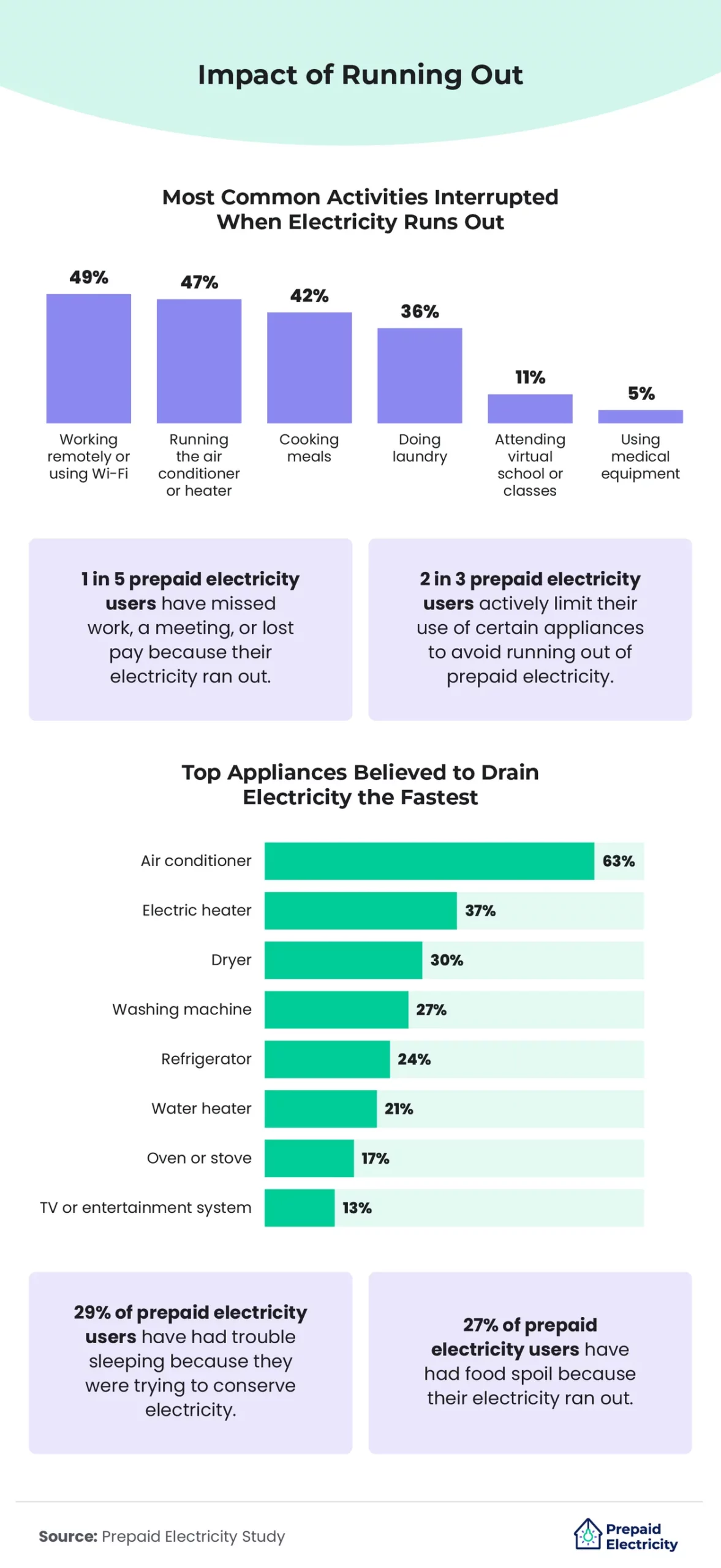
- 49% of prepaid electricity users have been interrupted while working remotely or using Wi-Fi due to running out of electricity; 11% have been interrupted while attending virtual school or classes.
- 1 in 5 prepaid electricity users have lost pay or missed work or a meeting because their electricity ran out.
- 2 in 3 prepaid electricity users actively limit their use of certain appliances to avoid running out of prepaid electricity.
- 29% of prepaid electricity users have had trouble sleeping because they were trying to conserve electricity.
- 27% of prepaid electricity users have had food spoil because their electricity ran out.
The Seasonal Squeeze and the Trade-Offs Households Make
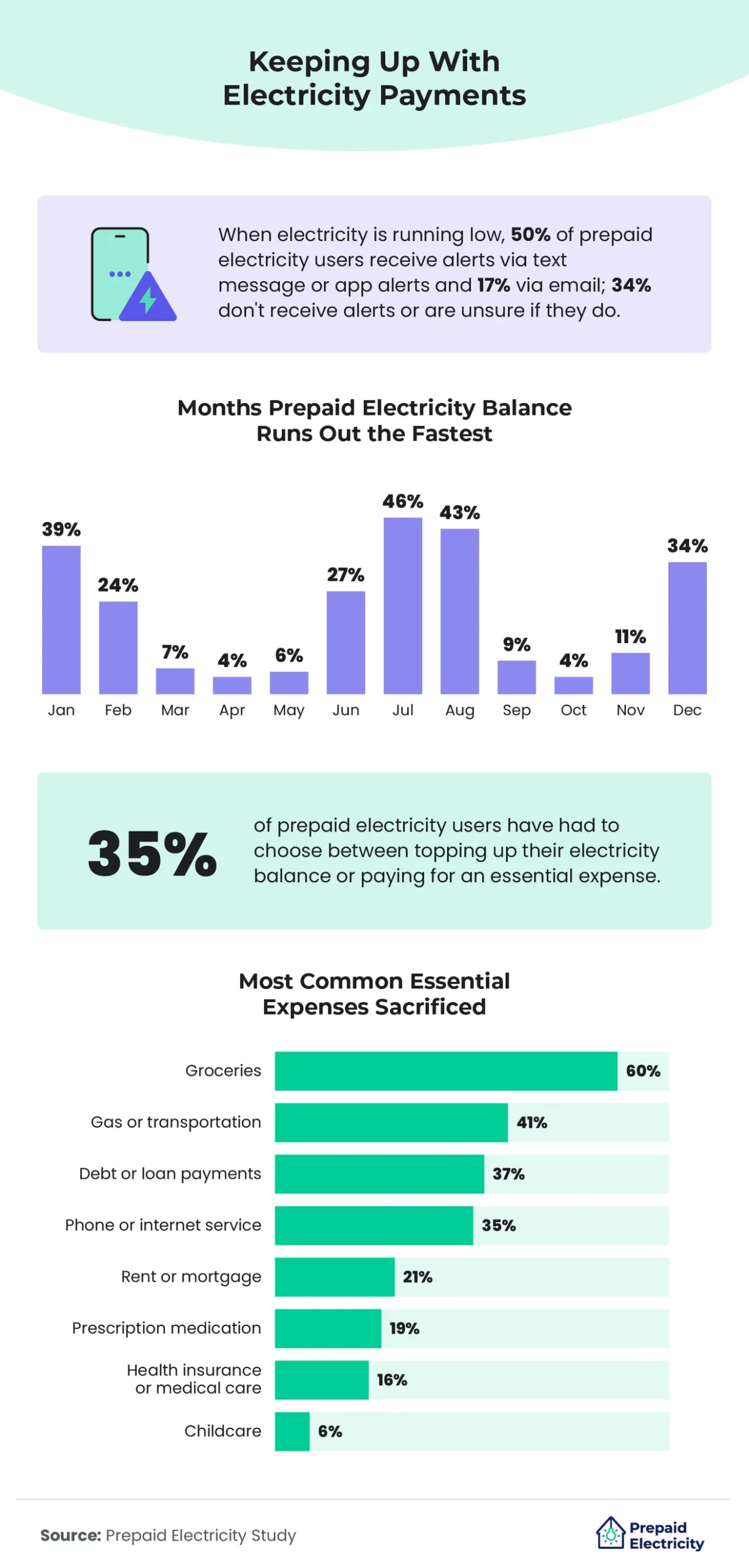
- When electricity is running low, 50% of prepaid electricity users receive alerts via text or app notifications, and 17% via email; 34% don’t receive alerts or are unsure whether they do.
- Prepaid electricity users run out of their balance fastest in July (49%), August (43%), and January (39%).
- 35% of prepaid electricity users have had to choose between topping up their electricity balance or paying for an essential expense; groceries (60%), gas or transportation (41%), and debt or loan payments (37%) are the most common sacrifices.
Practical Steps to Stay Ahead Of Your Balance
Prepaid electricity works a lot like real-time budgeting — you can see what you’re using as you go, which helps many households keep spending in check. It does mean paying a bit more attention day to day, especially during hot summers and cold winters when energy use climbs.
With a little planning, clear alerts, and a good sense of which appliances use the most power, staying ahead of a prepaid balance can feel much more manageable. To help keep your balance on track, here are a few practical tips:
- Check alert settings regularly: Confirm that low-balance texts, app alerts, or emails are turned on and going to the right phone number or inbox, and consider adding a backup contact method.
- Plan around peak months: Treat July, August, and January as higher-usage periods and check balances more often during these times.
- Identify top energy loads: Take note of the biggest household energy users, such as air conditioning, heating, or the dryer, and create a simple plan for how and when to use them on high-demand days.
- Review recovery options: Know the fastest ways to top up, including online, app-based, or retail options, so restoring power stays quick and predictable.
Methodology
For this study, researchers surveyed 1,002 prepaid electricity customers across the United States to understand how often their balances run out, how long it takes to restore power, and how these events affect daily life. Respondents reported their experiences with recovery time, seasonal patterns, work and home disruptions, and the trade-offs they made when money for electricity competed with other essential expenses.
About Prepaid Electricity
Prepaid Electricity makes it easy to get power on your terms. With no credit checks, no deposits, and same-day connections, you’re in control from the start. We work with trusted providers to give you simple, affordable prepaid electricity plans plus daily balance alerts so there are never any surprises. Getting started is fast, easy, and stress-free.
Fair Use Statement
The information in this article may be used for noncommercial purposes with proper attribution. If you share or reference these findings, please include a link back to Prepaid Electricity as the original source.